
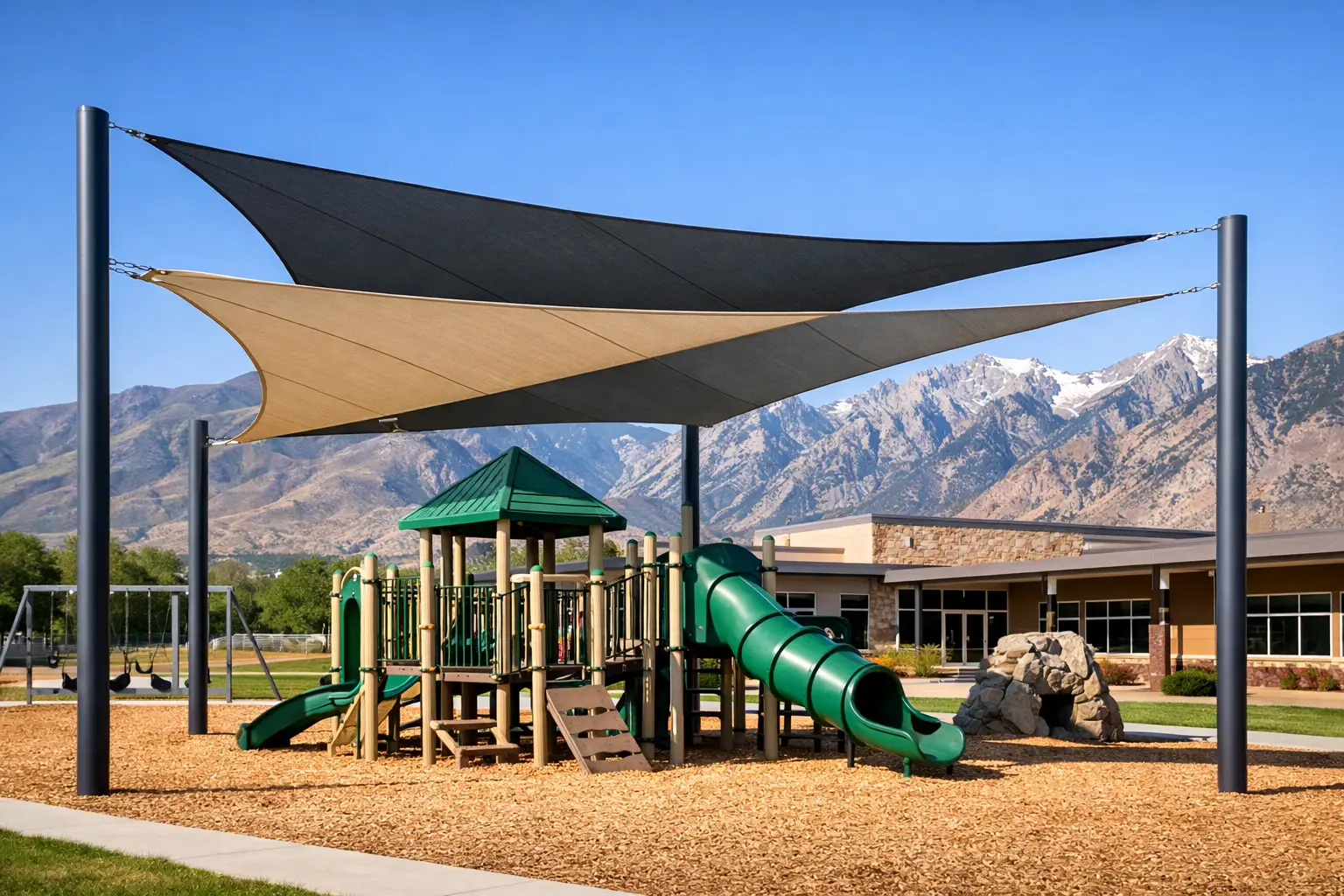
A playground can look complete on a site plan and still sit mostly empty during the hottest part of the day. For Utah schools, direct sun across play structures, seating areas, and blacktop can limit how comfortably students and staff use the space. The right Utah school playground shade plan creates relief where it matters most while preserving clear sightlines, durable access paths, and the open feel of the playground.
Custom shade sails are a strong fit for many school campuses because they can be designed around the actual playground rather than forcing the playground to fit a standard structure. The best result is not simply more fabric overhead. It is a well-planned shade system that accounts for the sun’s path, student activity, supervision needs, support locations, and the long-term demands of an active campus.
What Utah School Playground Shade Needs to Do
A school shade system has a different job than a small patio cover. It needs to support daily recess, outdoor learning, pickup activity, and seasonal events without making the space feel enclosed or difficult to supervise. Coverage should reduce direct sun over the areas students use most often, including play equipment, benches, sensory play zones, outdoor classrooms, and waiting areas.
The location of that coverage matters as much as its size. A sail placed directly over a climber may not provide meaningful afternoon shade on nearby seating. A system that shades only a narrow strip of pavement may miss the areas that become the least usable when temperatures climb. Reviewing the site at different times of day helps identify where shade will provide the most practical benefit.
Shade also supports better outdoor comfort, but it is not a substitute for school supervision, hydration, appropriate clothing, or heat-related activity policies. Schools should treat it as one part of a thoughtful outdoor environment. The goal is to give students and staff more usable options when sun exposure would otherwise shorten recess or push activities indoors.
Start With the Playground Layout, Not a Standard Sail Size
Every campus has constraints that affect the design. Existing play structures, concrete paths, mature trees, utility locations, building walls, drainage patterns, gates, and emergency access all influence where a shade system can go. A custom layout considers these conditions before poles, attachments, fabric shapes, or footing locations are selected.
Plan for the sun students actually experience
Morning drop-off, midday recess, and late-afternoon programs may use the same playground very differently. On many Utah sites, the strongest direct exposure shifts across the play area as the day progresses. A site evaluation can identify which zones need priority coverage and whether one larger sail or several overlapping sails will create the better result.
Layered sail designs are often useful when a school needs broad coverage without building a heavy-looking canopy. Different elevations and angles can create visual interest while allowing rain and debris to shed from the fabric. The right approach depends on the available footprint, surrounding attachments, and the desired coverage pattern.
Preserve supervision and circulation
Staff need clear views of play areas, entry points, and student gathering zones. Pole locations should not create unnecessary obstacles near high-traffic paths or interfere with accessible movement around the playground. The layout should also leave enough room for maintenance access, future equipment changes, and normal campus operations.
A thoughtful design does not treat support poles as an afterthought. Their placement affects how the shade system looks, how students move through the area, and whether the finished installation feels intentional rather than added on.
Commercial-Grade Materials Make the Difference
School playground shade systems are exposed to constant UV, temperature swings, wind, dust, and everyday use. Fabric, hardware, poles, and footings all need to work together as a complete system. A quality shade sail is not just stretched material tied between convenient points.
Commercial-grade shade fabric is selected for outdoor exposure, color, visual density, and the amount of shade desired. Fabric selection can influence the character of the space as well. Neutral tones often blend with campus architecture, while carefully chosen colors can define a preschool area, complement school branding, or make an outdoor classroom feel more inviting. Color should be considered alongside heat, maintenance appearance, and the overall setting.
Steel support poles, appropriate wall mounts where applicable, and marine-grade or stainless hardware create the foundation for a clean installation. Each connection must support proper sail geometry and ongoing tension. When corners are poorly positioned or tension is inconsistent, fabric can sag, look unfinished, and wear prematurely.
Concrete footings are equally important. They help create stable support points for a system designed around real site conditions. Soil, access for equipment, nearby hardscape, and the placement of existing infrastructure all affect how installation planning should proceed.
Proper Tensioning Keeps the System Clean and Functional
A shade sail should have a deliberate, sculpted appearance. That comes from the combination of correct fabric shaping, support heights, connection details, and professional tensioning. The curves built into a properly designed sail are purposeful. They allow the fabric to tension into position rather than hanging flat like a tarp.
For schools, this level of finish matters beyond appearance. A cleanly tensioned system is easier to inspect, less likely to collect loose debris, and better suited to a polished campus environment. Final adjustment after installation gives the crew an opportunity to refine tension and confirm that the completed system presents as intended.
This is where a full-scope shade sail provider brings value. Rather than leaving a school to coordinate fabric, poles, footings, hardware, and installers separately, the process can be planned as one integrated project. SunVault Shades evaluates the site, develops the layout, supplies custom components, installs the system, and completes final tensioning and adjustment.
Choosing Coverage That Fits the School’s Priorities
Not every playground needs the same shade strategy. A preschool may benefit most from covering a compact play area where younger children spend extended time. An elementary school may prioritize a large structure, lunch tables, or a paved activity zone. A campus with several outdoor areas may be better served by phased installations that address the most exposed locations first.
The decision often comes down to how the space is used and how much flexibility the school needs. Larger coverage can create a more dramatic improvement in outdoor comfort, but it also requires appropriate room for support locations and a layout that works around the existing campus. Smaller sails can target specific hot spots with a lighter visual footprint. Neither option is automatically better.
Schools should also consider how the shade system will fit future plans. If new playground equipment, outdoor seating, landscaping, or building improvements are anticipated, that information should be part of the initial conversation. Planning around likely changes can help protect the long-term value of the installation.
A Better Starting Point for School Decision-Makers
Before requesting estimates, gather a few practical details: photos of the playground, approximate dimensions, the areas that receive the most direct sun, and any known access or attachment limitations. This gives a shade provider a clearer picture of the project and leads to a more productive site evaluation.
The most effective Utah school playground shade systems begin with the students who use the space every day, then build outward from the site conditions. When the layout, materials, support structure, and installation are handled with care, a playground becomes more comfortable, more visually finished, and more useful throughout the school day. A site evaluation is the right next step for schools ready to turn an exposed play area into a better-performing outdoor space.